
Why classic test-driven development doesn’t fit AI-powered coding
There was a time when Test-Driven Development (TDD) was treated as a foundational discipline in software engineering. Writing the failing test first, then the minimal implementation, and finally refactoring became the mantra for clean code — a ritual popularized by Uncle Bob and widely practiced in craftsmanship circles.
But in the era of GitHub Copilot, autonomous coding agents, and large language model-assisted development, that model no longer fits the way we build software. It’s not that testing is obsolete — far from it. But the rigid, test-first mindset of TDD has become a mismatch for how AI-enhanced teams operate today.
From deliberate design to dynamic interaction
TDD was built for a world where developers crafted every line by hand. It enforced intentionality: design the behavior, write a failing test, then write code to satisfy it. But modern development is increasingly reactive and iterative. Developers prompt Copilot, tweak generated snippets, and evolve code based on live feedback — not formal specifications.
In this world, tests often come after the first working version, generated automatically or written selectively to validate the most critical paths. The idea of pausing to handcraft a test before writing code can feel more like friction than discipline.
Agents change the game
In systems where multi-agent architectures write, review, and refactor code collaboratively — with distinct roles like planner, implementer, reviewer, tester — the classical TDD cycle doesn’t even make sense. These agents engage in iterative convergence: proposing, analyzing, adapting. The act of manually specifying behavior in test-first style becomes almost redundant when the agents themselves are reasoning toward intent.
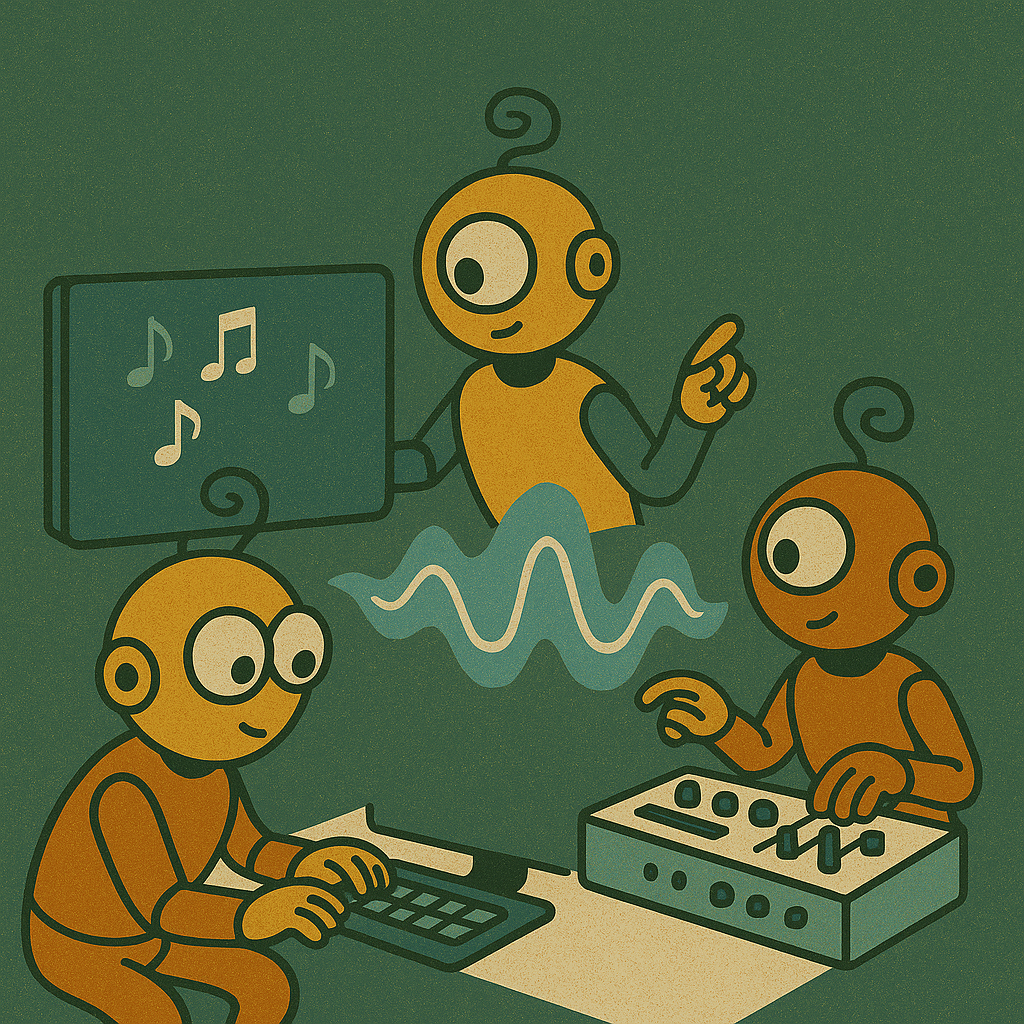
And with frameworks like AutoGen, LangGraph, or CrewAI, these collaborative agent workflows are already becoming part of real-world toolchains1.
Not anti-testing — just post-dogmatic
Let’s be clear: testing remains essential. But it’s time to evolve the mental model. TDD enforces a strict workflow that’s no longer compatible with fluid, AI-assisted development.
Instead of dogma, we need testing strategies that match our tooling:
- Post-hoc AI-generated tests, reviewed and enriched by humans
- Property-based testing, using tools like Hypothesis (Python) or jqwik (Java) to validate system behavior over wide input ranges
- Observability-first development, leveraging tools like OpenTelemetry or Grafana Loki to trace runtime behavior instead of relying solely on static tests
- Simulation and scenario testing, often orchestrated using platforms like TestContainers or Cypress for integrated flows
- Contract-first testing, especially in API development, using OpenAPI, Pact2, or GraphQL schema validation
Trust isn’t blind — it’s built
In AI-enhanced development, trust is the new test — but not in the naïve sense of blind faith in machine output. The core question isn’t just “does the code pass tests?” but rather:
Do we understand and trust how the code was produced?
This trust must be constructed, measured, and governed. That means:
- Traceable pipelines, where code origin (AI or human) is recorded — e.g., via GitHub’s Copilot telemetry, or internal annotations in CI/CD logs
- Audit trails, supported by tools like Traceloop or PromptLayer to monitor LLM and agent decisions
- Mitigation and oversight policies, including AI usage policies (see NIST AI Risk Management Framework or EU AI Act guidelines)
- Bias and compliance checks, using frameworks such as TrustyAI (by Red Hat) to validate fairness, explainability, and correctness in AI-generated logic
- Secure design reviews, where agents’ code is verified against threat models, known vulnerability patterns, and business constraints — ideally automated

From test-first to trust-first
TDD was a great discipline for the era of hand-coded logic. But in a world where code is co-authored with machines, and change is continuous, we need more adaptive validation practices — not inherited rituals from a pre-AI era.
Trust in AI-assisted systems isn’t automatic. But with the right governance, tooling, and cultural shifts, it’s entirely possible to build systems we can rely on — even if they weren’t written line-by-line by a human hand.
Footnotes